
Resonant Methods

Resonant Cavity Method products determine RF material properties using the resonance method, where RF Energy is leaked into the fixture so that it resonates at select frequencies, depending on the cavity length. Introduction of a small material specimen into the cavity causes the resonant frequency to shift and the quality factor of the resonance to degrade. These changes are then translated into intrinsic material properties such as real and imaginary permittivity or permeability.


Resonant cavity methods are a complementary alternative to broadband techniques; however, they are more complicated and only work at select frequencies. They provide an effective amplification of the measured signals with the advantage of working on electrically small specimens and/or increased sensitivity to low-loss material properties.
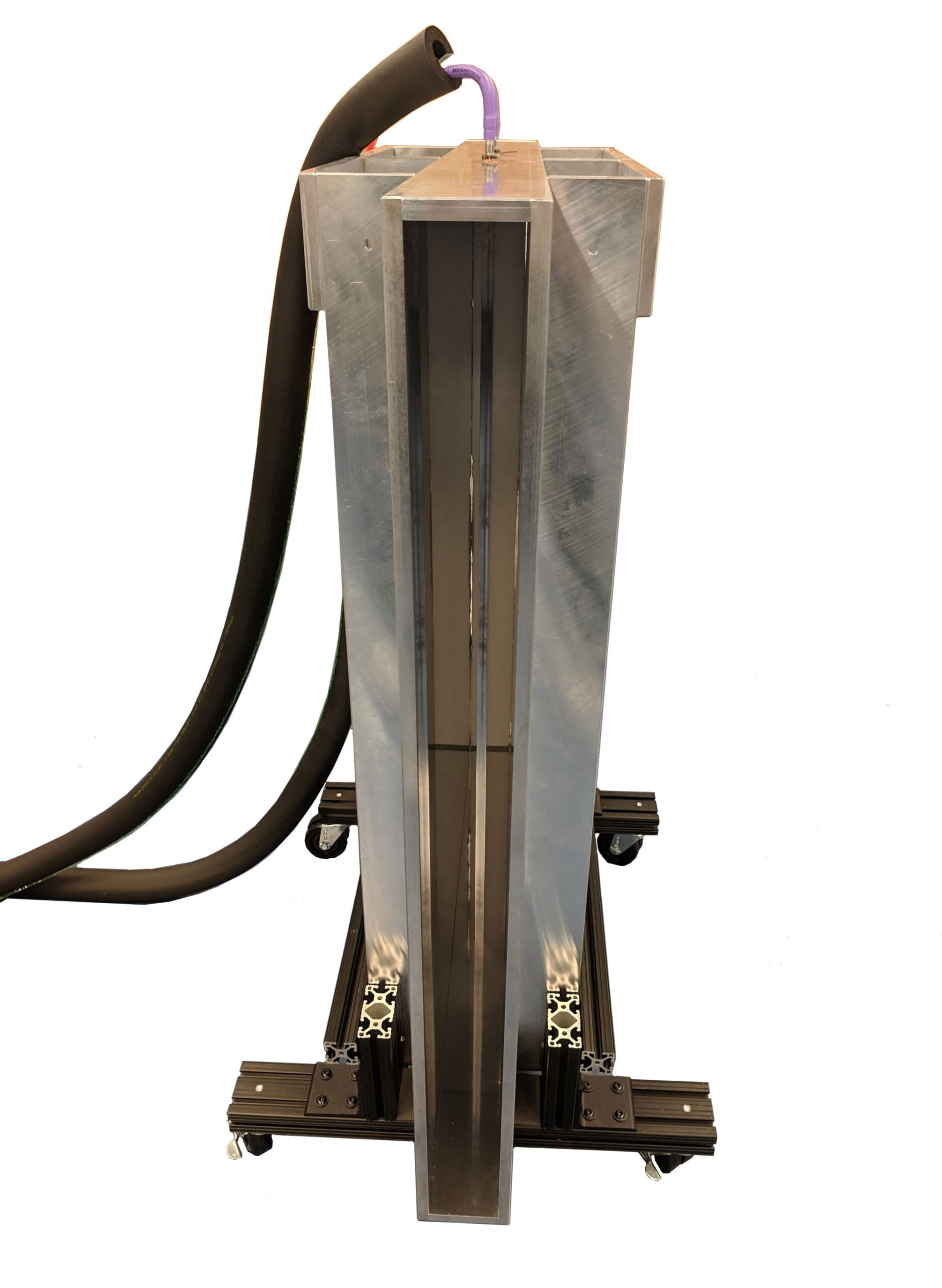
Stripline cavity uses a section of stripline waveguide that is shorted at both ends

Stripline Cavity

The stripline cavity is a section of stripline waveguide that is shorted at both ends and therefore resonates at frequencies corresponding to half wavelength intervals of the cavity length. A small material specimen placed at one end of the cavity then causes the resonance to be perturbed from which the real and imaginary magnetic permeability of the specimen are calculated.
A resonant waveguide cavity which resonates at frequencies corresponding to half wavelength intervals of the cavity length

Waveguide Cavity

The waveguide cavity is a section of rectangular waveguide truncated with irises at both ends, therefore resonating at frequencies corresponding to half wavelength intervals of the cavity length. A small material specimen is inserted through a hole in the middle of the cavity, causing the resonance to be perturbed and that perturbation is used to determine the real and imaginary dielectric permittivity of the specimen. This method follows the ASTM D2520 standard method.